Industrial Gas Knowledge Hub
Practical guides on gas applications, cylinder handling, product requirements and sourcing for importers, wholesalers, brand owners and other business buyers.
Building a More Reliable Industrial Gas Supply Chain for European Manufacturers
Discover how a structured sourcing strategy helps European manufacturers improve supply reliability, maintain compliance, and reduce procurement complexity.
Complete Buyer’s Guide to Industrial Gas Procurement in Europe
Learn how to source certified industrial gases in Europe. Discover supplier selection criteria, compliance requirements, quality standards, and procurement best practices.
From Source to Supply: How Industrial Gas Reaches Your Business
Every industrial gas delivery is the result of a carefully managed supply chain. From verified production facilities to final delivery, each stage plays an important role in maintaining quality, safety, and consistency.
The Future of Industrial Gas Distribution in Europe: Five Trends Every Business Should Watch
Explore the key trends shaping industrial gas distribution across Europe, from supply chain resilience and sustainability to digital procurement and regulatory compliance.
Understanding EU Certification Standards for Industrial Gas Cylinders
Learn why EU certification, traceability, and quality assurance are essential when sourcing industrial gas cylinders across Europe.
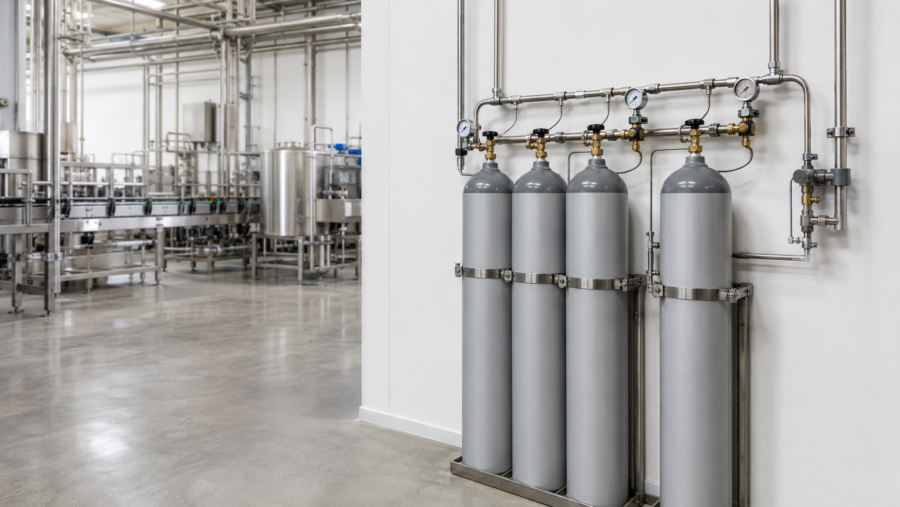
Food Grade CO2 vs Industrial CO2: Purity, Compliance and Supplier Qualification
Food Grade CO2 and industrial CO2 may contain the same molecule, but they are not automatically interchangeable. The decisive difference is not simply the headline CO2 percentage. It is whether the gas has been produced, handled, tested, documented and released under controls appropriate for use in the food chain. For European food and beverage businesses, […]

Industrial Gas Cylinder Storage: EU and UK Requirements for Businesses
Industrial gas cylinder storage requires more than placing cylinders inside a locked cage. The arrangement must reflect the gases held, cylinder condition, inventory volume, ventilation, ignition risks and applicable national rules. There is no single storage layout that is automatically compliant across every EU and UK facility. Businesses must apply the relevant legal framework, supplier […]

MIG Welding Gas Guide: Choosing Argon, CO2 and Shielding Gas Mixtures
Selecting a MIG welding gas affects arc stability, penetration, spatter, travel speed, bead profile and post-weld cleaning. The correct choice depends on the base material, transfer mode, filler wire, equipment and approved welding procedure, not simply the lowest cylinder price. For most carbon-steel MIG/MAG applications, an argon and carbon dioxide mixture provides a practical balance […]

Argon Gas: Uses, Properties and Industrial Applications
Argon is one of the most widely used inert gases in industry. It protects molten metal during welding, helps manufacturers maintain controlled atmospheres and supports processes where contact with oxygen or other reactive gases can affect quality. Its usefulness comes from a simple property: argon is highly unreactive. That makes it valuable wherever a process […]

What Is Nitrogen Gas Used For? A Guide to Industrial Applications and Supply
Most industrial nitrogen is bought for a fairly simple reason: something in the process needs less oxygen. That may mean protecting packaged food from oxidation, purging a vessel before a process begins, keeping a controlled atmosphere around sensitive manufacturing work or supplying an assist gas for laser cutting. The gas is the same — nitrogen, […]

Helium Uses in Industry: Applications, Supply Risks and What Buyers Should Know
Mention helium and most people think of balloons. In industry, helium uses are far more specialised, ranging from MRI cooling and semiconductor manufacturing to leak detection, welding and aerospace applications. For buyers, the question is therefore not simply where helium is used, but what purity is required, how much is consumed, how it should be […]

Industrial Gas Cylinder Sizes: Capacity, Pressure and Choosing the Right Cylinder
Choosing a gas cylinder sounds straightforward until two cylinders of similar height turn out to contain different amounts of gas. That is because gas cylinder sizes are not defined by one measurement alone. Physical height and diameter matter for storage and handling. Water capacity describes the internal volume of the cylinder. Filling pressure affects how […]

TIG Welding Gas Guide: Argon, Helium and Choosing the Right Shielding Gas
Choosing a TIG welding gas is not simply a matter of connecting an argon cylinder and starting the arc. For most TIG welding applications, argon is the standard shielding gas because it provides stable shielding and works across a wide range of metals. Helium and argon-helium mixtures can be useful where greater heat input, penetration or welding speed is […]

Nitrogen Purging: How It Works, Methods, Applications and Gas Supply
Nitrogen purging is used across industrial facilities to remove oxygen, moisture, residual vapours and other unwanted contaminants from pipelines, tanks, vessels and process equipment. By replacing the existing atmosphere with nitrogen, operators can establish controlled conditions before commissioning, maintenance, production, shutdown or product transfer. The process can help reduce oxidation, protect sensitive products and equipment, […]

How Is Helium Used in Semiconductor Manufacturing?
Helium supports critical semiconductor processes including wafer cooling, vacuum leak detection and controlled processing environments. Learn why its properties, purity and supply reliability matter to semiconductor manufacturers.

Nitrogen vs Oxygen for Laser Cutting: Choosing the Right Assist Gas
When comparing nitrogen vs oxygen for laser cutting, there is no single gas that is best for every job. Oxygen is commonly used when cutting mild and carbon steel because it reacts with the hot metal and contributes additional heat to the cutting process. Nitrogen, by contrast, is an inert assist gas. It is widely […]

Food Grade Nitrogen (E941): Uses, Purity and Modified Atmosphere Packaging
Food grade nitrogen is widely used in food processing and modified atmosphere packaging to reduce oxygen exposure and create controlled atmospheres. This guide explains E941 purity requirements, nitrogen’s role in MAP, common applications, safety considerations and what professional buyers should check when sourcing food-grade gas.

Gas Purity Grades Explained: 4.5, 5.0, 6.0 and High-Purity Gases
Gas purity grades such as 4.5, 5.0 and 6.0 show increasingly low impurity levels. This guide explains grade notation, ppm values, critical contaminants and what industrial buyers should check when specifying high-purity gas.

Gas Cylinder Identification: Colour Codes, Labels & Markings in the UK and Europe
A practical guide to identifying industrial gas cylinders using product labels, permanent markings and BS EN 1089-3 shoulder colour coding in the UK and Europe.
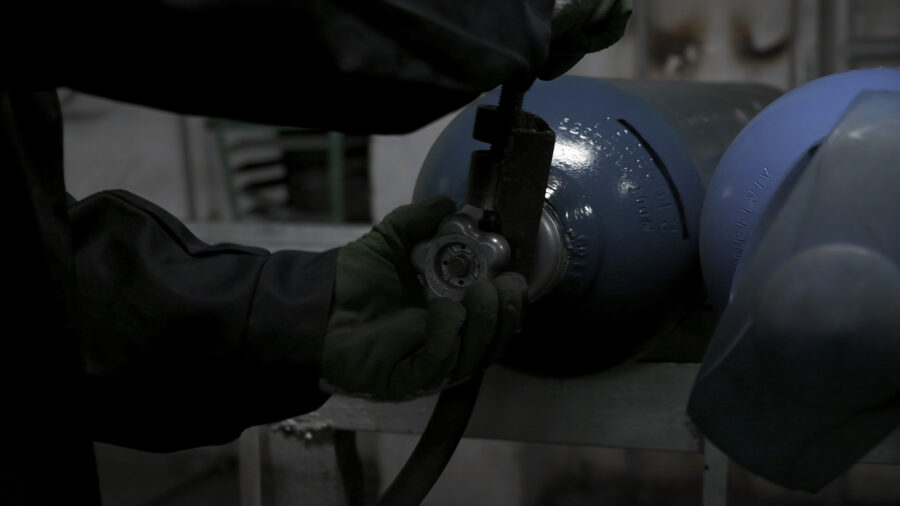
Helium Leak Testing: How Tracer-Gas Leak Detection Works
A practical guide to helium leak testing for industrial teams, covering vacuum and sniffer methods, leak rates, calibration, tracer-gas specification, safety and helium supply planning.
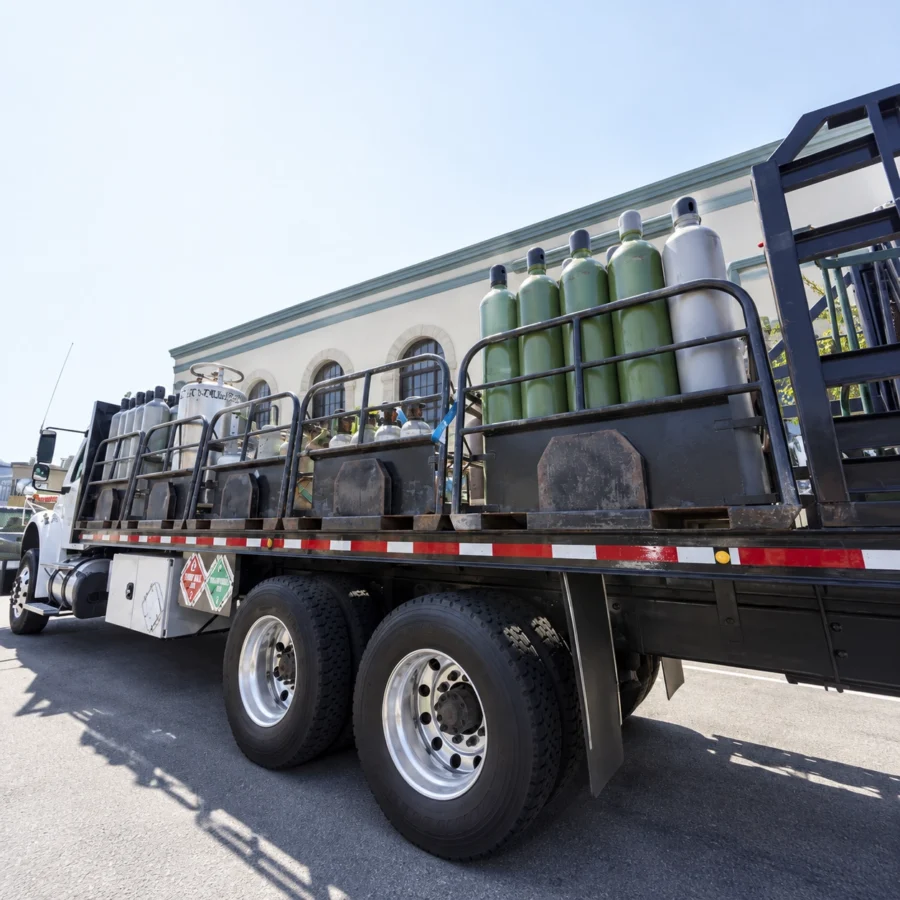
Transporting Gas Cylinders: UK & EU ADR Requirements for Businesses
Transporting gas cylinders for work can bring dangerous-goods responsibilities under ADR and national law. This guide explains the UK and EU framework, small-load exemptions, cylinder checks, securing, ventilation and training considerations for businesses.
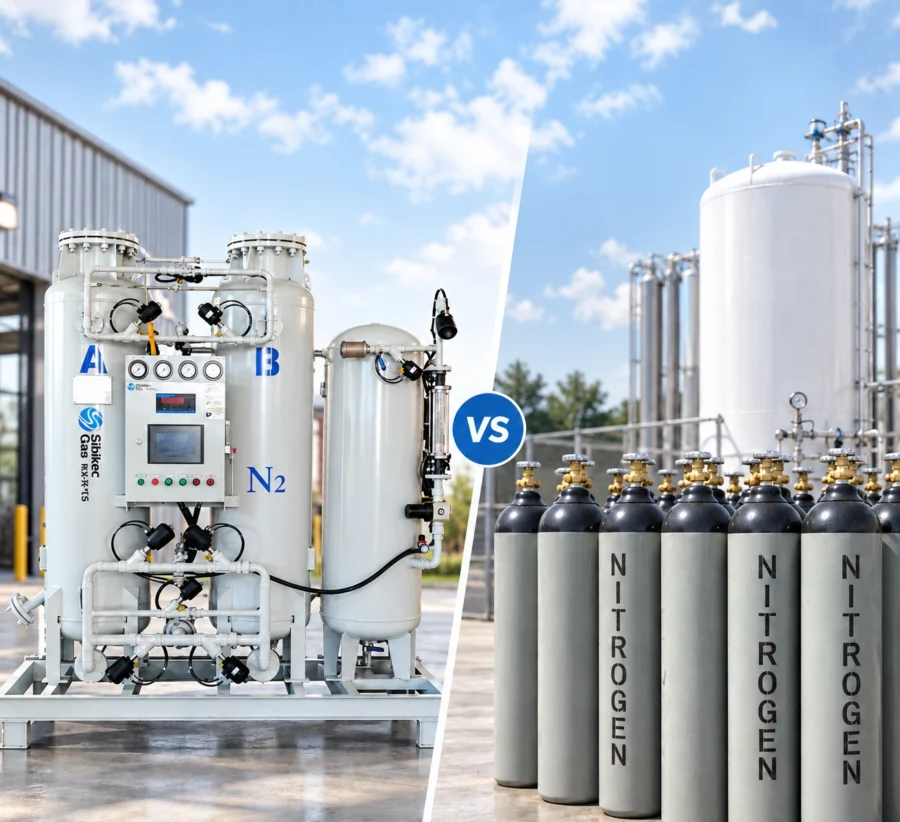
Industrial Nitrogen Generator vs Cylinders & Bulk Nitrogen: A B2B Supply Guide
Nitrogen can be supplied in cylinders, delivered as bulk liquid or generated on site. This B2B guide compares purity, reliability, infrastructure, maintenance and total supply cost.

Oxy-Acetylene Cutting & Oxy-Fuel Gases: A B2B Selection Guide
Oxy-fuel cutting uses oxygen with a fuel gas such as acetylene or propane. This B2B guide explains gas roles, fuel selection, material suitability, supply planning and key safety considerations.
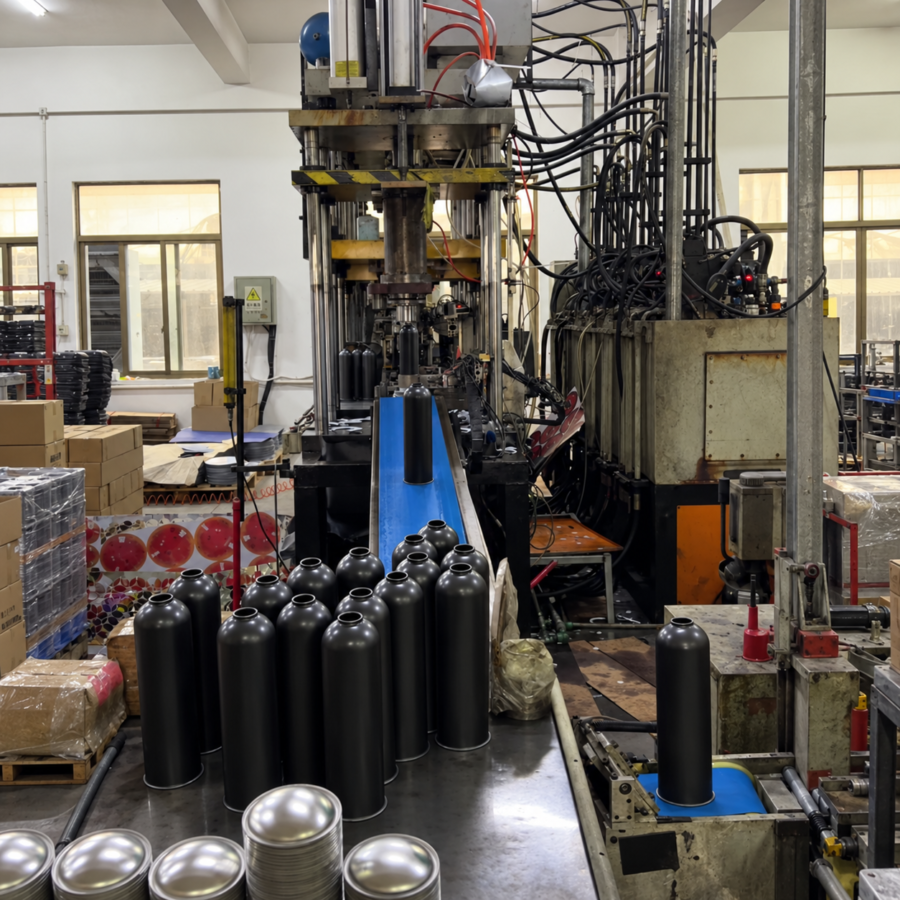
Private Label Gas Cylinder Sizes: CO₂, Helium & N₂O for B2B Buyers
A B2B guide to private label gas cylinder sizes for CO₂, helium and N₂O, covering formats, branding, packaging, compliance and supply planning.
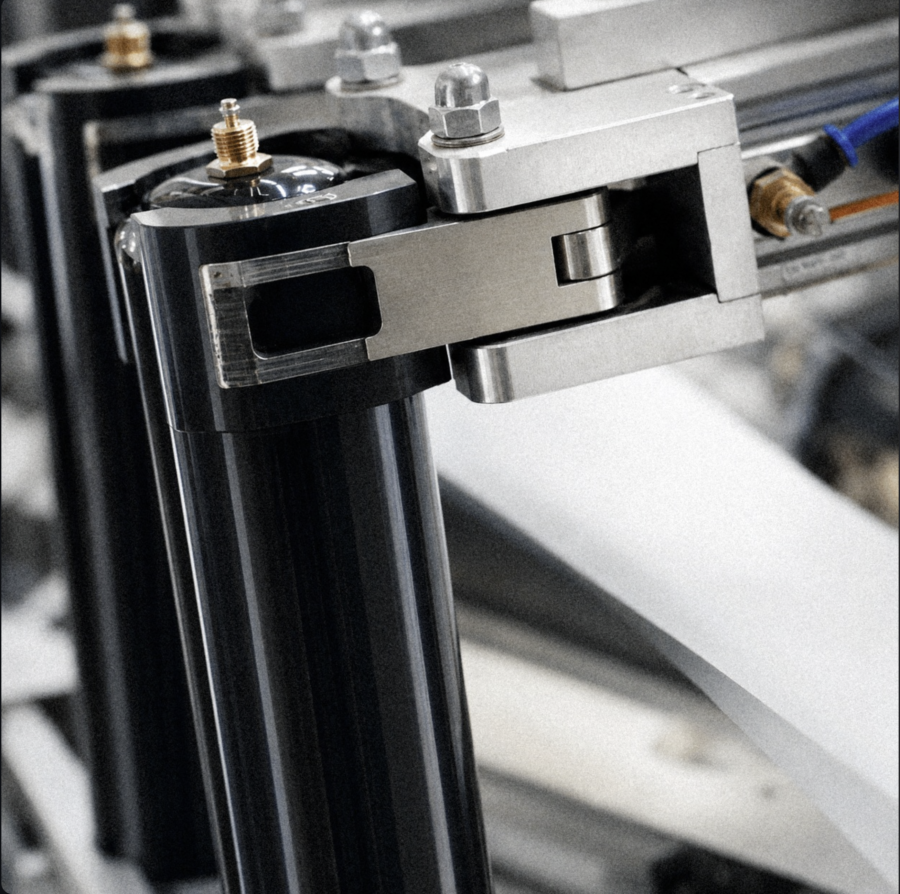
Bulk Nitrous Oxide: 7 Essential Checks for Private-Label Buyers
A practical B2B sourcing guide to private-label nitrous oxide, covering order quantities, manufacturing, international transport, documentation and supply planning.